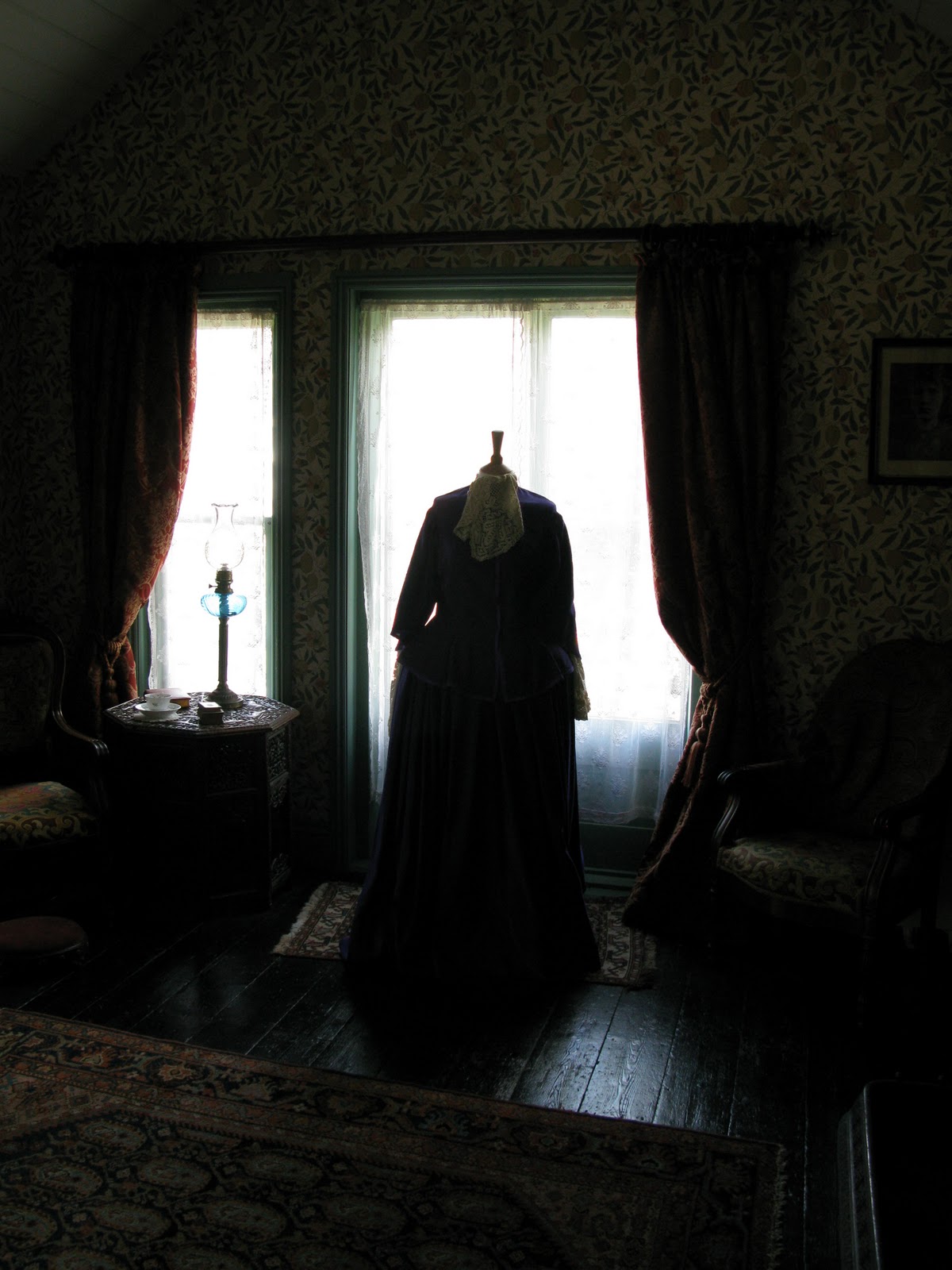
Tuesday, 27 September 2011

'Dystopia' - Laine's Warehouse, Bordeaux, France

Travelling through France in summer was as usual a feast for the eyes. Starting with a walk  around the walled city of St.Malo, thunderous storms over the bay of La Rochelle and then on to Bordeaux, famous for wine and food.
It was there I discovered the 'Dystopia' exhibition  at Laine's Warehouse, a vast three floor building.

Dystopia is an exhibition conceived at the same time as the author and art critic Mark Von Schlegell wrote the catalogue - novel New Dystopia.The author worked closely with the exhibition curator Alexis Vaillant on the choice of works and venues set up and design.

The Greek etymology of the word 'dystopia' can mean "a place with negative connotations".
Think Alduous Huxleys 'Brave New World' 1931 or George Orwell's, '1984' written in 1949. Ray Bradbury's 'Fahrenheit', 1953 or Andrew Stanton's Wall-e, written in 2008. These are all dystopian novels.


I have selected a work by artist Michael Stevenson.  'Landscape With The Beginning of Civilization, 2010'

Ten aquaria and terraria each containing the remains of their previous tenants go to make this installation. Arranged in ascending order of size, these aquaria retrace the shared biological evolution of their former residents.
In setting up a parallel between the hermit crab and man,who, for their development,both require access to an ever larger habitat, the artist introduces the vacancy chain notion.

This theory of vacancy is based on the vulnerability of the human being in the face of the permanence of his environment.
This work felt so relevant, particularly now during these difficult financial times. As I listened to Radio 4 this week and heard that there is no country in the world concerned with the Climate Crisis since the Credit Crisis eventuated.
The feeling of desolation within these installations was to me, a stark reminder of what could be a global dystopia.

Other works exhibited in Dystopia :
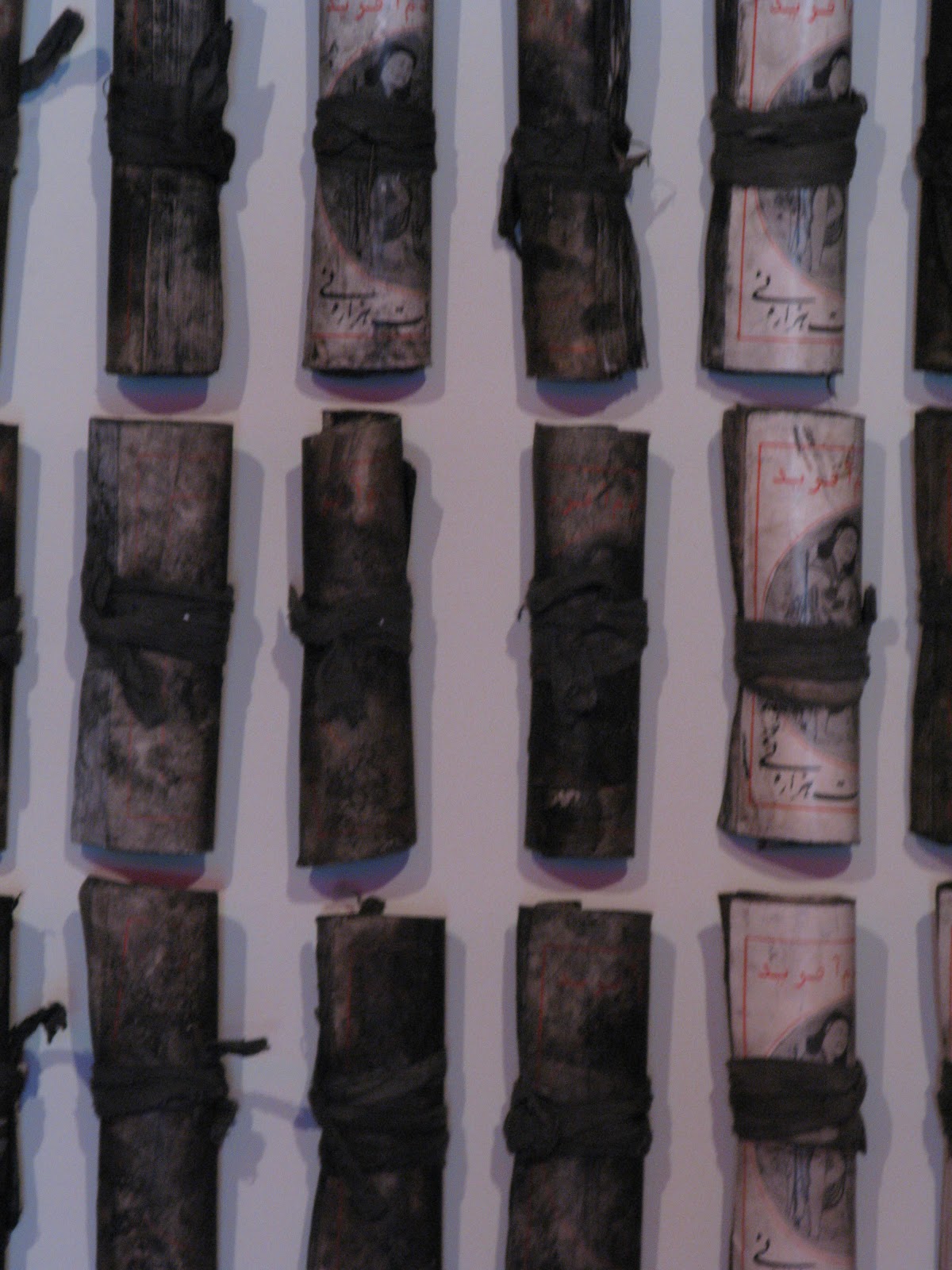


Sabastian Hammwohner


Peter Coffin

Inspired: Julia Margaret Cameron - The Isle of Wight

It has been on my mind for many years to travel to The isle of Wight and visit Dimbola Lodge.
I finally got to do this over the summer holidays.
Dimbola Lodge was home to the pioneer photographer Julia Margaret Cameron. She was born in India in 1815. From 1860 to 1875 she made Dimbola her workplace and turned her chicken hut into a darkroom and studio. Julia established the photographic portrait as an art form in its own right. She photographed everyone from the famous,local children to her own maids.
The photographic album was a Victorian household article - similar to the use of camcorders and  dvds of today.

The process for Julia was laborious and she worked with three maids (assistants) to help her prepare plates and process the images. She often worked in freezing conditions and once wrote to her old friend Edward Ryan, " It has been a real labour for in all the freezing weather I have poured nine cans of water fresh from the well over each photograph"

When in London Julia would work on her images in the South Kensington Museum ( now the V&A) which had the advantage of continous running water !
I have always admired her theatrically soft,romantic imagery  -  I like the contrast of the work ethic behind it all - she worked with tenacity even under  very trying and uncomfortable circumstances.

For me Julia Margaret Cameron and her work ethic is someone to aspire to no matter how long has passed since she was in her chicken hut and coal shed.

Julia Passed away in India. Apparently, as she lay outside in her bed at night she looked up at the stars she uttered her last word, 'Beautiful'.


I left feeling very moved and emotional, maybe I had been wanting to come here for so long, I don't know. I felt like I now know what it must be like to be religious and go to church !

Things That I Find - Left Behind

Often as I  walk around I come across objects which are at once
beautiful, poignant and at times disturbing. Other times they may be banal or it could be the texture  - I get my own sense of Wabi-Sabi about these objects. I am drawn in sometimes emotionally to these objects and situations.
discarded papers in Bordeaux- were they in a hurry or just too lazy to deliver ?
I find I cannot just 'leave'. I have tried to and then just end up going back, retracing my tracks - sometimes miles, to capture it on film.
a coat left on a bench in Bordeaux - what happened to the owner ?
 I think for me it is the drama and beauty of these objects combined with the 'story' prior to my arrival that intrigues and compels me to return and record.
remnants of a feast + struggle
a bow-perhaps a reference to love for life or love for death
 My camera is a very important part of my art making process. I feel lost without it. I record most days, either creating imagery or finding resources within the environment. Even before digital photography was so accessible, I took many rolls of film.
It is my way of drawing,looking,recording and capturing the essence of what I interact with.

Tuesday, 26 July 2011

Sheffer Gallery Exhibition - Australia

Opening a long distance show with Australian artist, Ulrike Sturm, on Skype has been a very positive experience. It reminded me of my hour on the plinth in Trafalgar Square - a work about surveillance in the U.K. - contributing to Antony Gormleys living installation,' One and Other'. 

In the Sheffer Gallery my 'head' in the form of a laptop, was placed on a plinth. I was able to chat to people as they passed and discuss my work etc. I found it very interesting that some people were very conscious of the screen and felt 'observed' - they were very wary, however eventually they would come and say hello. 

The works shown are a selection of my current etchings. Large torn Japanese paper prints produced on steel. The steel was left behind in the acid bath over night in some instances to create the corrosive and broken texture to the physicality of the finished surface.
Other works were more sculptural -  prints pierced + embossed with pins, objects immersed in plaster, cement and wax.
A lot of work is in the preparation to get everything together in one place, wrap it all and send it off,  finding the right courier and price, price lists, press release and of course liasioning with Ulrike on all of the above.

Solitary - aquatint etching on steel

Ulrike Sturm + myself at the opening

the Private View evening

Sheffer Gallery + Things left behind
I feel as a project and experiment it was all worthwhile. I certainly learnt about myself as an artist whilst printing and just how quickly the deadline looms ! Prioritized lists are an essential
part of everything coming to fruition. I left a few items too late for the P.V. such as my supporting material in the form of books from The Foundling Museum and cards.


I 'got to know' the etching plates very well and what worked with regards to laying on the ink, tone and colours. Tearing the edge of the paper with a nail to create a feeling of the discarded object and printing off the edge allowed the images a sense of being palpable.

Over all this exhibition was a rich learning curve. 


Friday, 24 June 2011

Half -Tone Experimentation

Recently I have been preparing for a show in Sydney which has been driving my practice forward.This has been a good motivator and it is always great for me to have a deadline to work to. The works for the Sheffer Gallery  are etchings on Japanese paper and sculptural embossings.
 I plan to move away from etching for the time being -  the plan is to develop my screenprinting ability. I am already quite experienced in this area however I have now moved into the Half Tone technique which I have not really ever been engaged in visually - it has never appealed. The more I do it the more I can see it's potential for my work in the future. The broken imagery really appeals and I can see that breaking the rules within the bounds of screenprinting perfection will soon become apparent !
Just like every technique there are the quirky little details you need to know. Things you only find out by making mistakes - of which I have made many !  I will be searching for books on techniques and added info in the next few weeks . . . . . .
Image for the exhibition 'Protest'

detail of half tone print

Tuesday, 7 June 2011

Experimentation + new plates


steel etching plate

second edition of 10


steel etching plate

artists proof
Working with steel has its challenges. It is a hard metal and I have had trouble etching at home due to the lack of a rosin box to produce 'dust' + cover the steel evenly. Using the shaker method has proven to be hit and miss, however I do like the chance element + happy accidents. Below are my latest prints which I am working on for the show in Australia at the Sheffer Gallery, Sydney.

Monday, 23 May 2011

Etching + Acid + Japanese Papers

 Printed on Hahnemuhle paper. This paper was too heavy for the image and the colors were too explicit for what I wanted to achieve. The lines were too strong also. I do like the blurring and merging of tone so this will be a useful experiment for future work. I have decided to keep the plate one color and just use aquatint only to create imagery.
 I have set up the Nitric Acid at home. I can use it safely outside and move my work along and a faster pace than one workshop day a week ! I have gloves, mask and goggles for added safety
 This plate is processing outside. The acid strength was topped up and working nicely. I feel more confident to do 'spit bite' and mix up stronger acid. Brian ( the technician ) said, ' Never give acid a drink'. This is such a good thing to remember as acid will blow up and react if you DO add water to it!
 The processed plate after several immersions in the acid.
 Plate inked and polished ready for printing. Decided to use grey shades and alot of white.
 The outcome of the second print. I increased the density of color and tone to get more of a sense of drama into the imagery. The edges are torn and generally this image with its textures and divisions worked relatively well.
Experimented further with a second plate over the top allowed me to incorporate the circles as a flat representation of the sphere. I am especially enjoying printing on Japanese paper. It represents the imagery well and allows for fragility and textures to emerge.